MathTabla Labs

See the curriculum, then pick the model.

MathTabla Labs are now organized as learning progressions: repeated addition, area models, box methods, manipulatives, and traditional scaffolds all connect instead of living as one-off prototypes.

Live lab gallery

Curriculum paths

Start with the math idea

Each path shows the representation ladder: concrete model, visual structure, organized method, then the traditional scaffold.

Path

Repeated addition → area → box → algorithm

Multiplication progression

A KISS ladder for multiplication: start with grouped quantities, move into rectangles, then compress the same partial products into box and symbolic scaffolds.

  1. Next
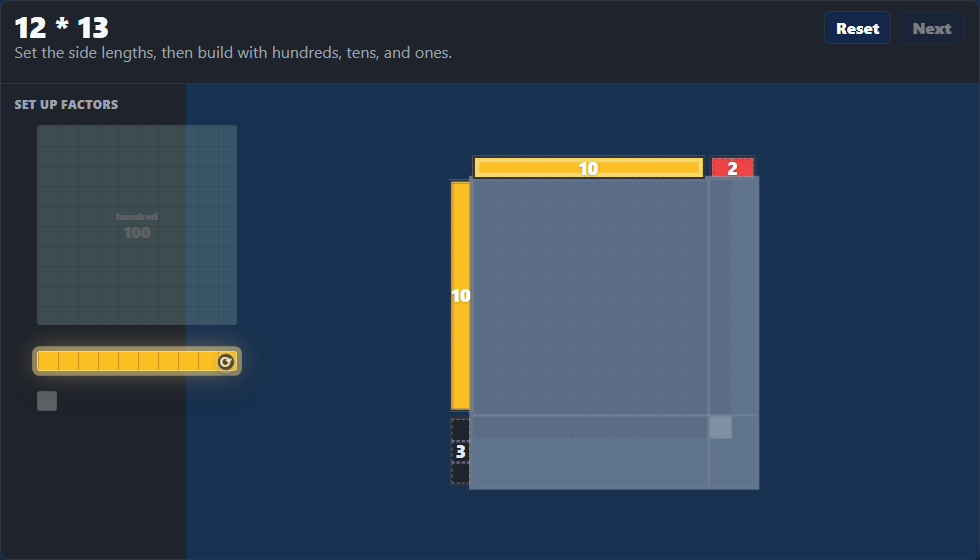
  2. Base-ten area modelWhole-number multiplication as a decomposed rectangle.Ready
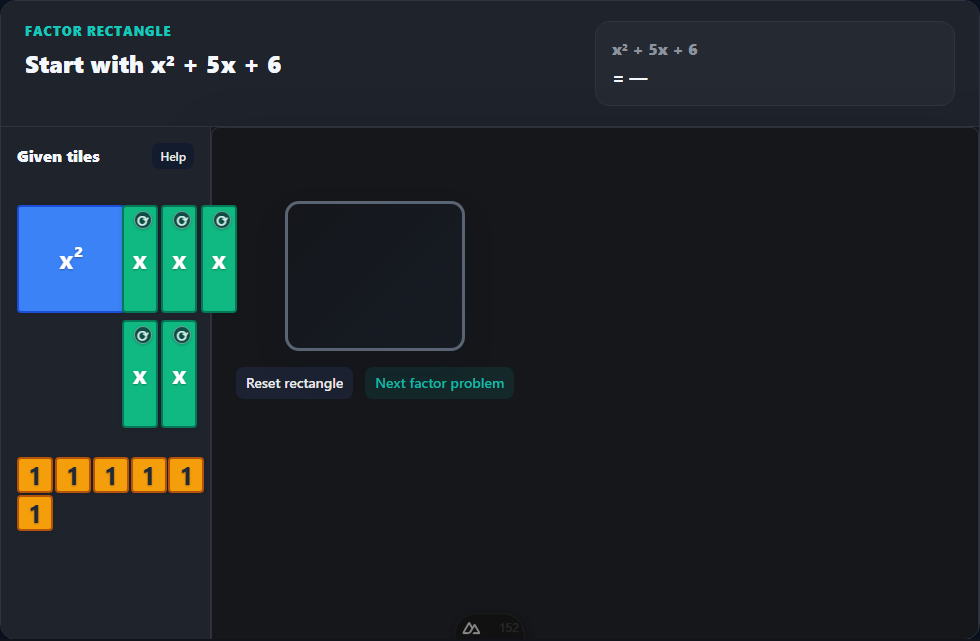
  3. Algebra tile binomialsBinomial products as area with x², x, and unit tiles.Ready
  4. Planned
Path

Reverse area → regroup → quotient

Division progression

Division should feel like running the rectangle backward: start with the area, keep one side fixed, and discover the missing side.

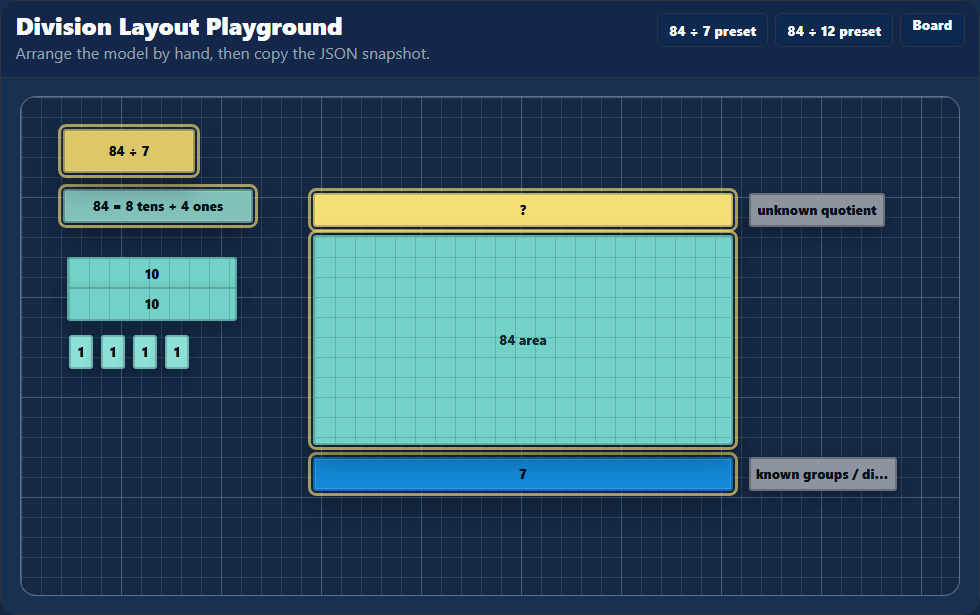
  1. Reverse base-ten rectangleBuild 84 ÷ 7 by regrouping tens and ones against the known side.Ready
  2. Division layout languageName target area, side rail, quotient rail, and regrouping regions.Prototype
  3. Planned
  4. Planned
Path

Tiles → box → a·c → symbolic factoring

Factoring progression

Factoring is multiplication in reverse, so the UX should separate the manipulative model from the box method and later symbolic cases.

  1. Next
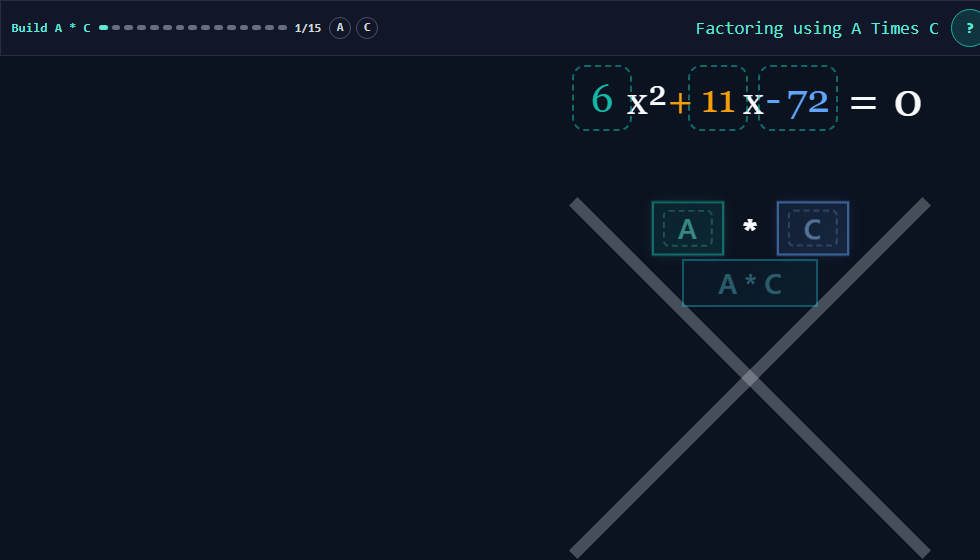
  2. Box method factoringSplit the middle term, fill the box, and read factors from rails.Ready
  3. Planned
  4. Planned
Path

Length model → common unit → add → reduce

Fraction common-unit progression

Fractions need a representation ladder too: rods for magnitude, organizers for common units, then symbolic addition and simplification.

  1. Fractions as rod lengthsChoose a whole, compare parts, and feel equivalent lengths.Prototype
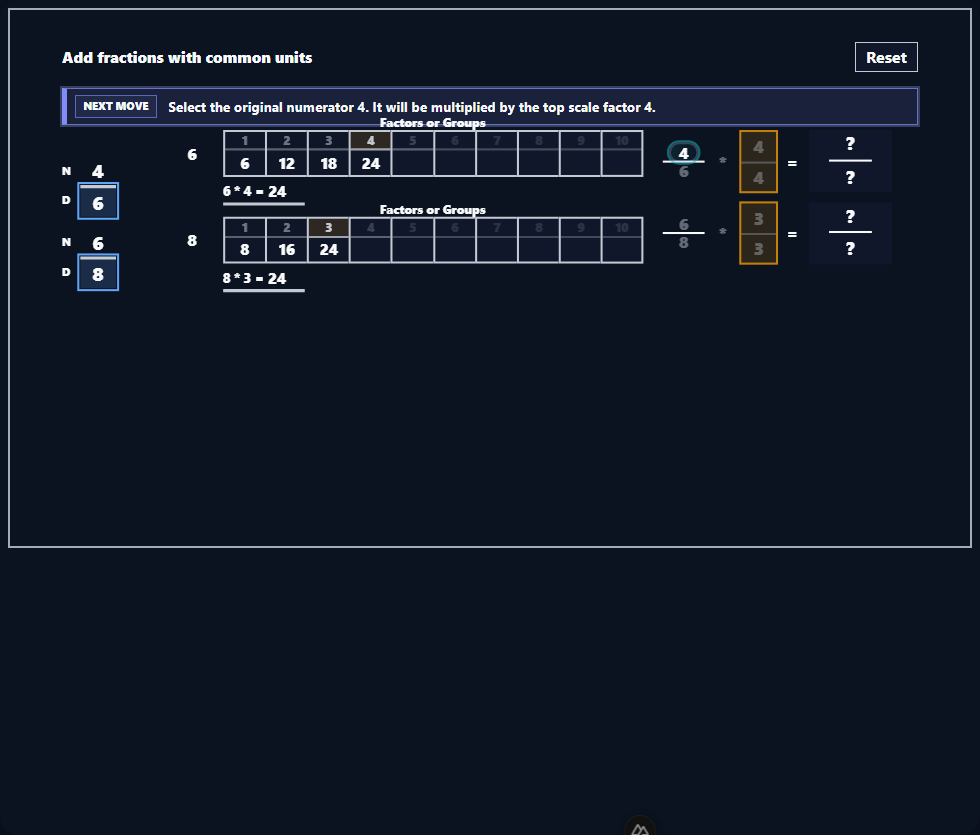
  2. Common denominator organizerRace denominator rows to find the first shared unit.Ready
  3. Composable organizer V2Break common-unit work into smaller engines: race, scale, add, reduce, convert.Ready
  4. Planned

Manipulative families

Then choose the representation

Families are reusable engines. A family can power several curriculum tasks without turning one page into a three-headed prototype dragon.

Whole-number structure

Base-ten blocks

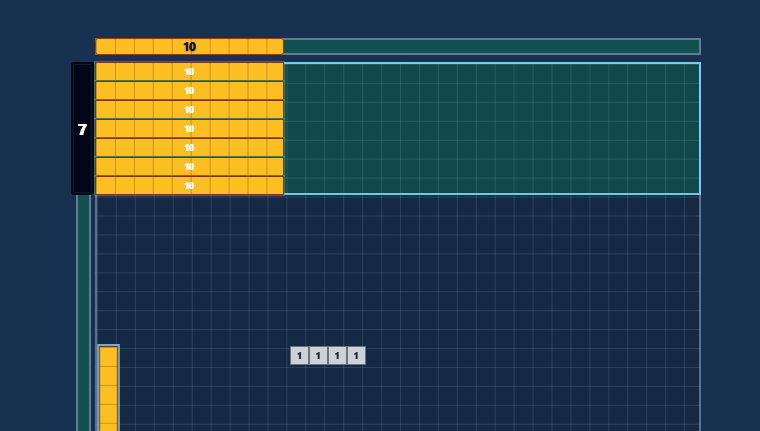
The concrete engine for place value, area multiplication, reverse-area division, regrouping, and eventually base-ten chains.

place valueareadivisionregrouping

Next: Build the base-ten chain / repeated-addition bridge.

Polynomial area model

Algebra tiles

A manipulative family for multiplying binomials, combining like terms, and later factoring trinomials without stuffing it all into one page.

binomial productslike termsfactoringbox bridge

Next: Split the current tile playground into focused multiplication and factoring pages.

Length relationships

Cuisenaire® rods

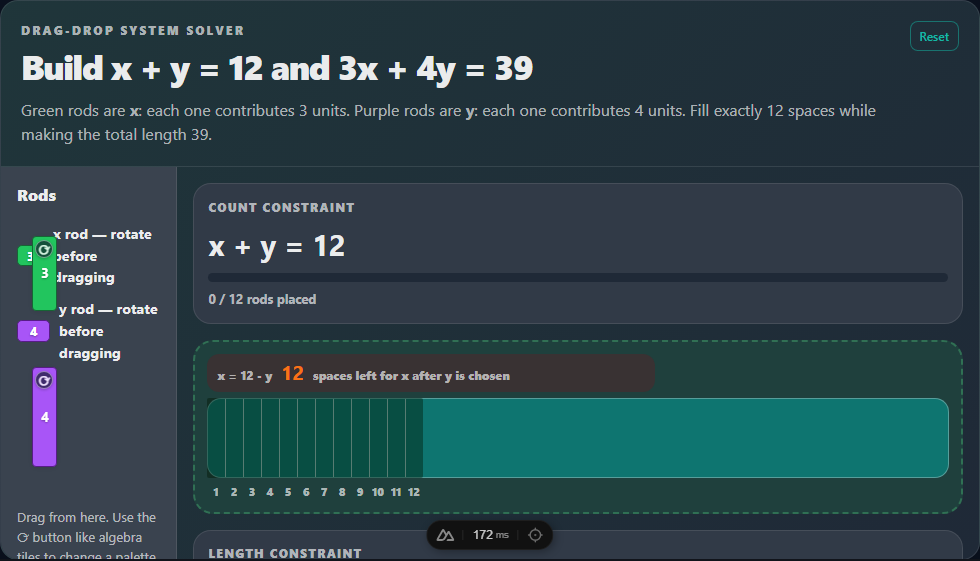
The representation for repeated addition, fraction magnitude, equivalent lengths, and systems/comparison work.

repeated additionfractionsequivalencesystems

Next: Create the multiplication/repeated-addition rod path.

Common-unit engine

Fraction organizers

A curriculum family for denominator races, scale factors, equivalent fractions, adding, reducing, and mixed-number conversion.

common denominatorscale factorsadditionreduction

Next: Promote V2 as the canonical activity and retire the old MVP to workshop when ready.

Current activity pages

Ready-to-open experiences

These are the concrete pages available now. Some will eventually move under focused curriculum-path routes.

Workshop shelf

Useful prototypes, clearly labeled

These stay accessible for development and review, but they no longer compete with the student-facing curriculum paths.

Cuisenaire® rods are referenced descriptively. MathTabla is not affiliated with or endorsed by the trademark owner. Legal notices